Let it grey.
Untreated teak Accept the silver-grey patina. Cleaning remains necessary.

The useful comparison starts with the appearance you want to maintain and the care you will actually provide. Naturally greying teak, colour-treated teak and coated aluminium involve different commitments. All three still leave the rest of the furniture to consider.
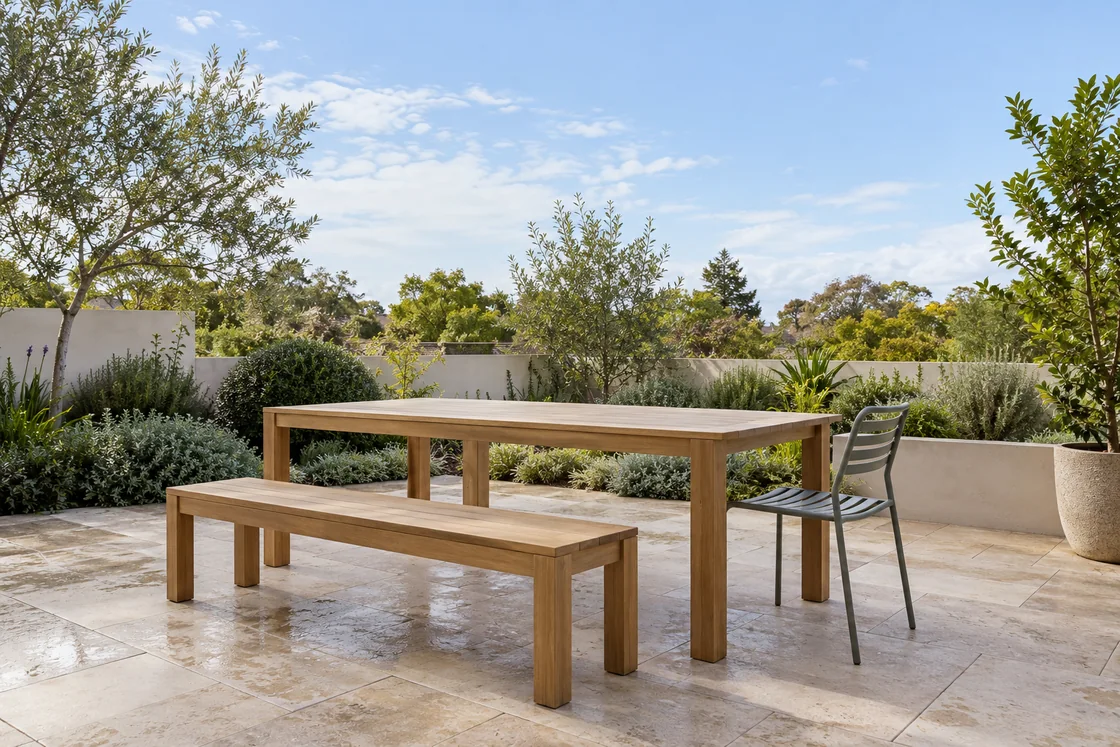
Keeping outdoor furniture on an uncovered patio and keeping it looking new are different goals. You might be happy to leave a teak bench outside as its colour changes, yet regret buying the same timber if you expected it to stay honey-brown without regular treatment.
Aluminium avoids that particular colour-care decision. It does not make an upholstered lounge free of maintenance, or tell you what sits beneath the cushions. Some aluminium furniture includes timber as well.
Tell the retailer that the furniture will remain outside without a roof or seasonal indoor storage. Describe direct sun, damp shade and leaf litter, rather than asking only whether a piece is suitable for outdoors. Obtain the model's care instructions before ordering.
Then work through what protection is possible. A cover, a place for wet cushions to dry and somewhere to store them are separate requirements. You can avoid carrying a whole sofa indoors while still needing to handle its upholstery after rain.
If your plan is to leave every component in place, choose around that constraint from the beginning. A more expensive frame cannot compensate for a cushion routine you will not follow.
This comparison concerns sun and rain. Salt exposure and chlorinated pool settings require additional location checks.
Untreated teak Accept the silver-grey patina. Cleaning remains necessary.
An agreed colour-care plan Confirm the approved treatment and the repeat work it requires.
Coated aluminium Regular washing and attention to chips and scratches still matter.
Untreated teak develops a silver-grey patina. The Teak Place's care guide separates accepting that colour change from preserving the timber's honey tone. Allowing it to grey removes the goal of colour preservation, although cleaning remains necessary.
That is the strongest reason to question the blanket description of teak as high maintenance. A buyer who likes aged timber is choosing a different job from someone who wants the original colour. Neither should judge the purchase solely from photographs of new furniture.
Coated aluminium suits a buyer who prefers a finished surface and does not want a timber-colour treatment cycle. Its surface still needs care. Tait's powder-coat instructions call for regular washing and address chipping and scratching separately from structural damage. Choosing aluminium changes the maintenance task rather than eliminating it.
For either material, work from the actual finish instructions. The Marlboro bench page suggests occasional oiling, while its retailer's linked guide recommends Protector instead of oil. Harbour's teak instructions and The Teak Place's guide also differ on sanding. Before choosing teak for colour retention, get a consistent treatment plan for that model. Do not combine advice from unrelated products into one routine.
Colour change alone is not evidence of structural failure. Nor does an explanation of normal weathering make every crack or loose joint harmless. Ask for an assessment if a change affects a supporting part or the furniture's stability.
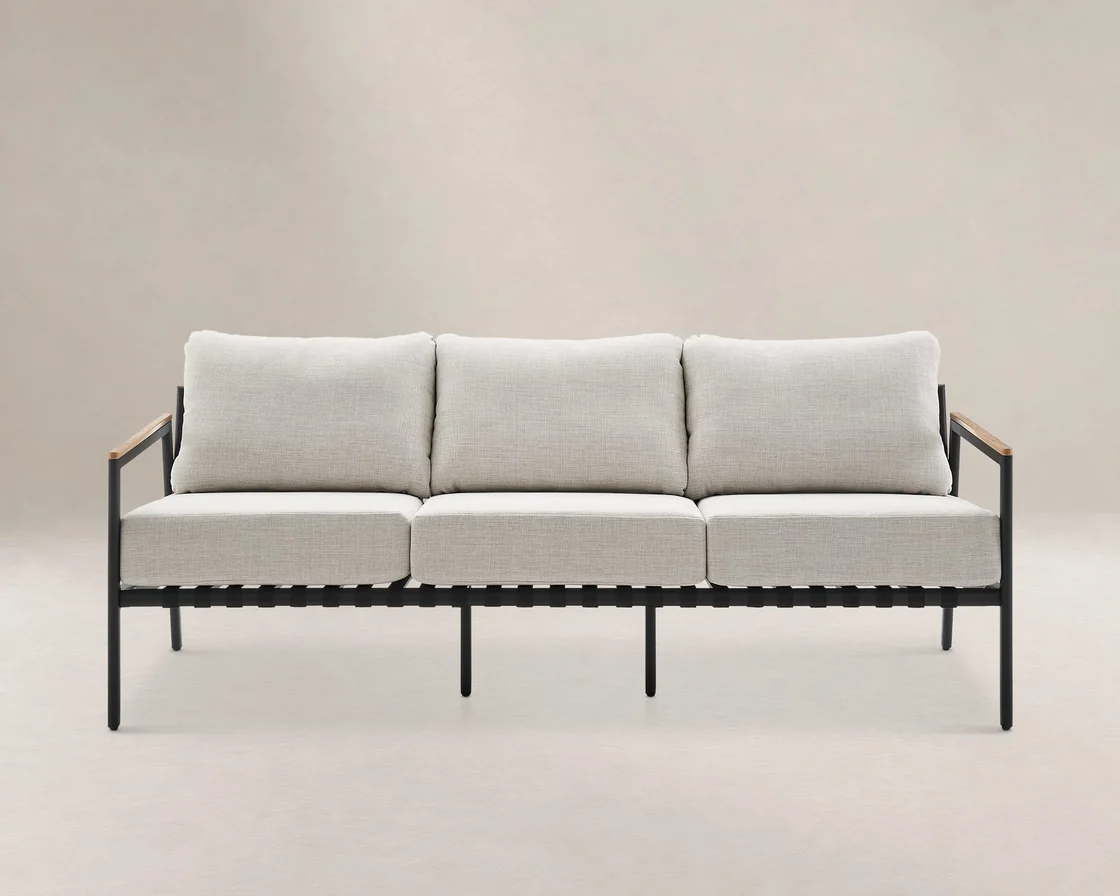
Castlery's Sorrento Outdoor 3 Seater Sofa, listed at A$1,399 in Emma / Natural Beige without a cover, is a useful example. Its specification names an aluminium frame, resin-wood armrests, webbing and fabric with PU foam. The cushion covers are removable. The frame material describes only part of what you will own.
Selected published materials
Outdoor 3 Seater Sofa
Aluminium 3 Seat Sofa
Harbour's Palm Beach Aluminium 3 Seat Sofa makes the point more directly. Alongside its powder-coated aluminium frame and rope, the feature list specifies concealed teak slatting. Buying the aluminium version does not remove timber from the construction. The Palm Beach Teak 3 Seat Sofa combines untreated solid teak with rope and cushions.
Check the connections, feet and supporting parts as well as the visible frame. Establish which components can be replaced separately. When you can try the furniture, sit in the middle, stand up and check stability on a surface representative of your patio.
For movement, use the actual product weight. Castlery lists the Sorrento at 22.86 kg, but comparable weights were not available in the Harbour specifications reviewed. The material name alone cannot establish which complete sofa is easier to move. Nor is weight alone evidence of wind stability.
Buying the aluminium version does not remove timber from the construction.
Harbour describes flow-through foam with a Dacron wrap in the Palm Beach seat cushions, and Dacron filling in the backs. That is more specific information than a general outdoor-fabric label. It still does not establish how quickly the cushions will dry on your patio or prove a measured advantage over the Sorrento's listed PU foam.
The same manufacturer's care guidance calls for removing wet cushions to dry and for furniture and cushions to be clean and dry before covering. Its product pages strongly recommend covers. A quick-dry claim does not remove those instructions, and a seat cushion's construction should not be assumed to describe the back cushions too.
Harbour's care guidance still applies to its specified cushion construction.
Furniture and cushions both need to be clean and dry before covering.
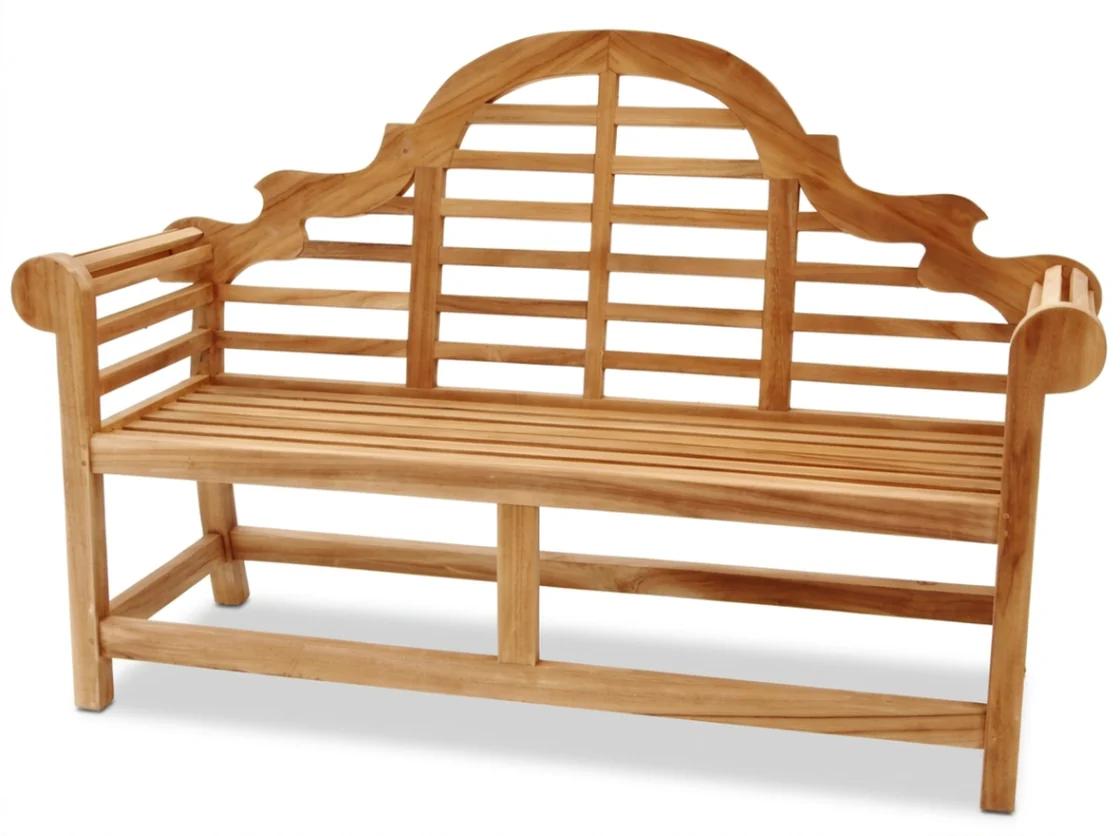
If handling loose cushions is the part you want to avoid, examine seating you would willingly use without them. The Teak Place's Marlboro Teak Garden Bench is A$1,155 for the 150 cm option without an added cushion. Check its footprint carefully: the retailer lists that option's outside length as 166 cm.
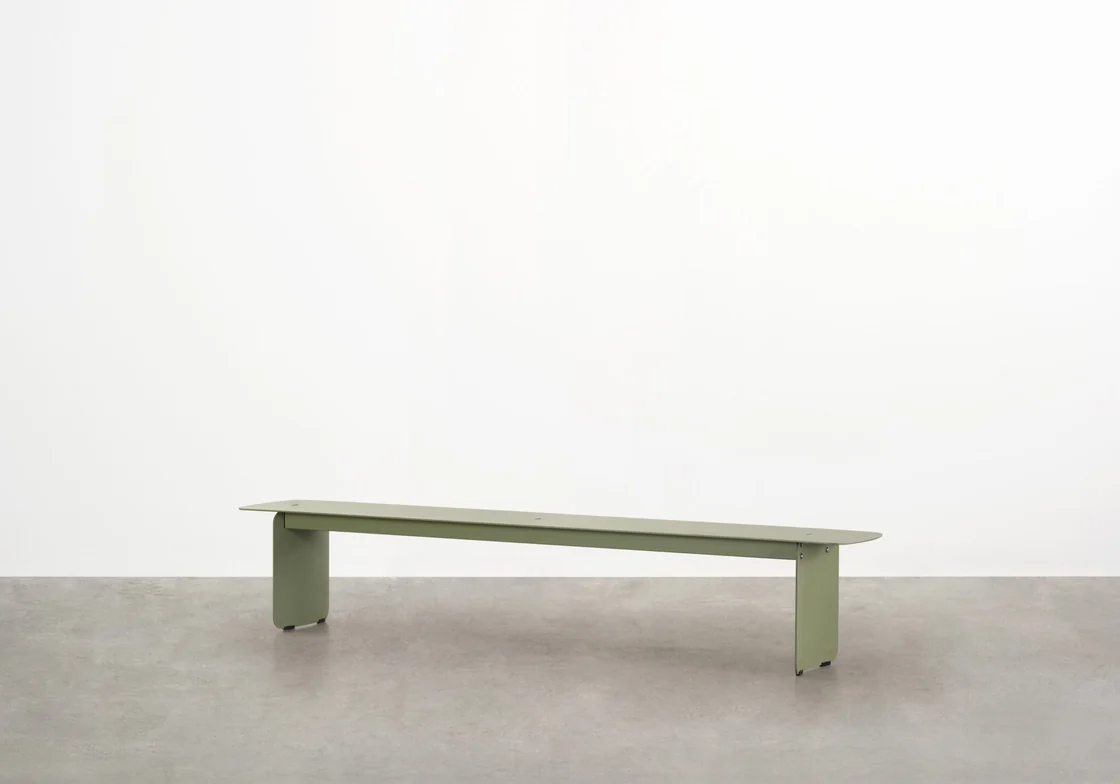
Tait's Voom Bench Seat offers a different form, combining rolled aluminium and stainless steel with powder coating and optional cushions. It starts at A$3,159 including GST, and Tait states that it is made in Australia. The page says both made to order and out of stock or unavailable. Obtain a current quote and lead time rather than assuming it can be ordered immediately.
These are different seating choices, not equivalent lounges with the upholstery removed. A bare bench is useful only if its comfort suits how long you intend to sit. If you would immediately add a cushion, include that cushion's care in the decision.
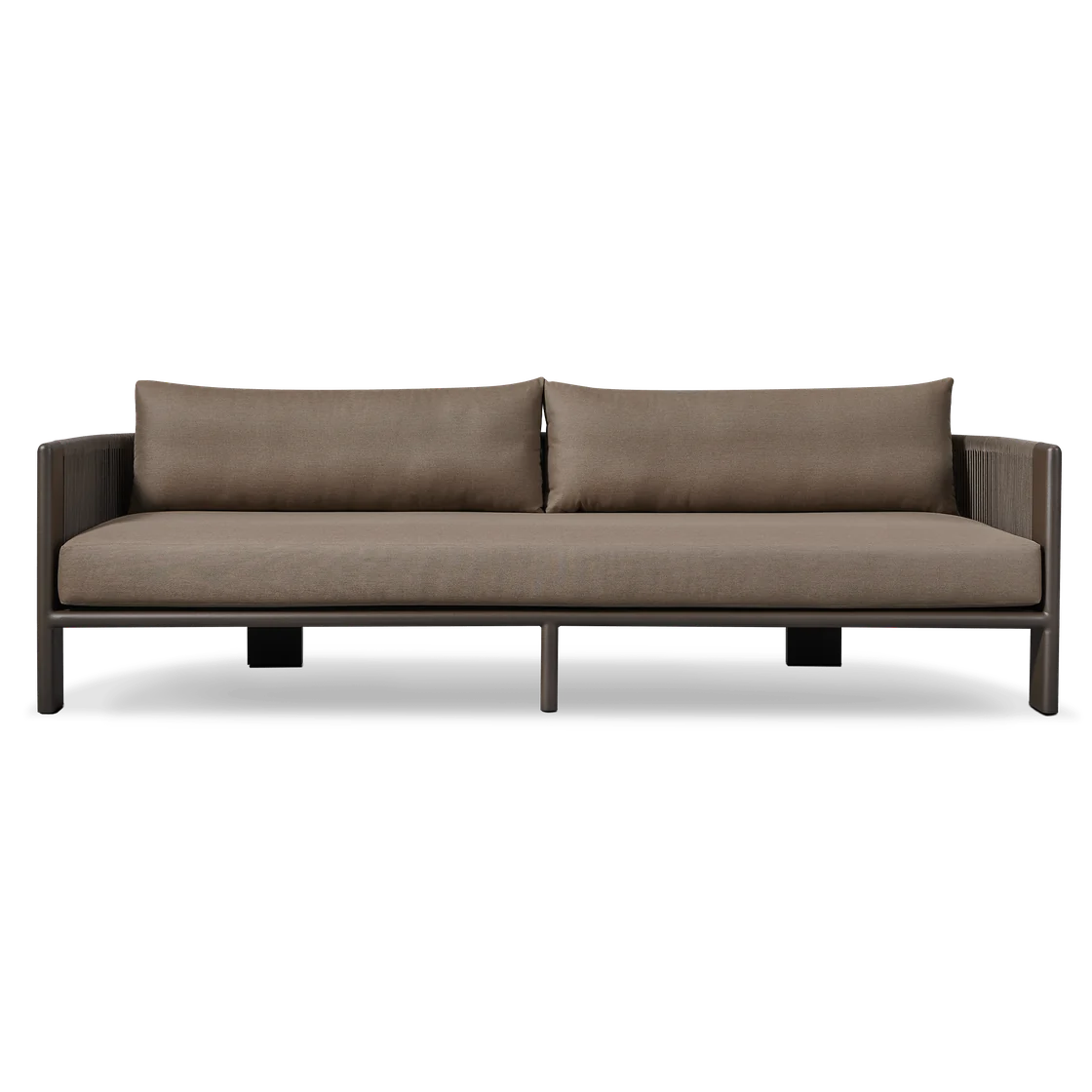
Bronze / Panama Coco / Rope Umber
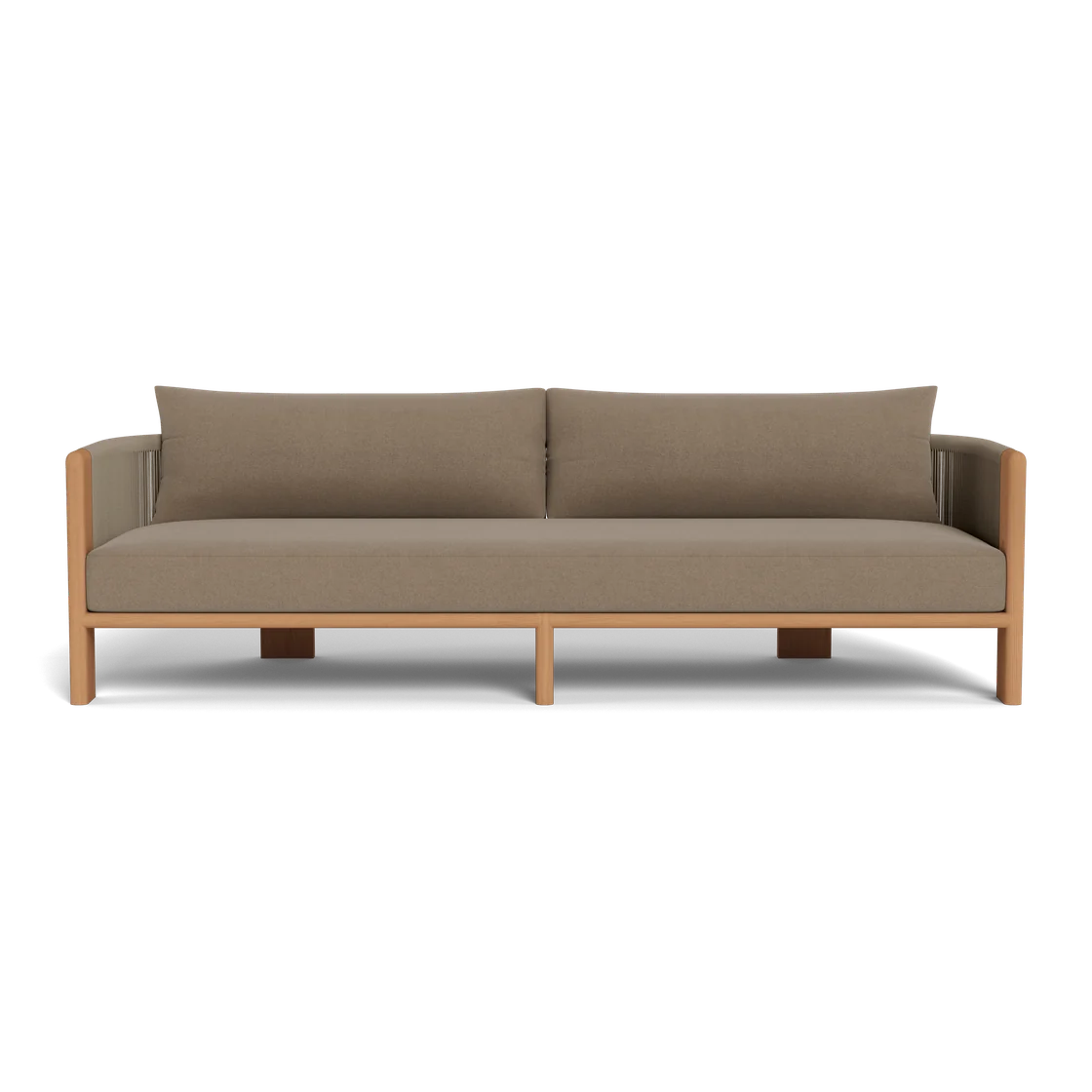
Teak Natural / Panama Coco / Rope Stone
Harbour's displayed Palm Beach aluminium configuration is A$4,995 in Bronze / Panama Coco / Rope Umber. The teak configuration is A$6,195 in Teak Natural / Panama Coco / Rope Stone. The difference is A$1,200, about 24% of the aluminium price.
It is a meaningful price comparison within one design family, but it does not isolate the cost or performance of the frame material. The rope colours differ, and identical dimensions and construction have not been independently established. There is no evidence here that paying 24% more buys a corresponding increase in service life.
Price check, 3 October 2026. Harbour’s product page displays A$6,195 for the teak configuration, while its current product data lists A$6,995 for that same SKU. The A$1,200 / about 24% comparison above uses the displayed-price snapshot. Confirm the exact configuration and current quote before ordering.
The Marlboro and Voom prices likewise compare different sizes, forms and constructions. They cannot tell you which material is generally cheaper.
An upgrade can be worthwhile for a seat you find more comfortable, a size that fits, a documented cushion construction or replacement support you can actually use. Ask what changes for the extra money. Once a less expensive suitable model meets your requirements, an upgrade needs an additional benefit you value. A premium price by itself supplies none.
Compare the cost of the complete order: furniture, delivery to your postcode, assembly, cover or storage, required care products and quoted replacement parts. A bottle price cannot establish annual maintenance cost without consumption and treatment frequency. Missing repair prices also prevent a credible lifetime-cost calculation.
Tait offers touch-up paint on request. That is evidence of a route for minor finish repairs, not a promise that a complete recoat will be economical. For upholstered furniture, seek prices for replacement cushions, covers, rope and fittings before buying. A removable cover is not a commitment to sell a replacement later.
Warranty scope deserves the same attention. The Sorrento page advertises five years for the frame, one for fabric and two for foam. Castlery's general warranty also excludes outdoor use in section 2(f). Get written clarification of how those statements apply to this outdoor model and an uncovered patio. The contradiction is not resolved by the product name.
Harbour's warranty table lists three years for frames and fabric, but one year for cushion-cover construction and outdoor foam. Cosmetic ageing and damage from extreme moisture or temperature are excluded. Ask how the exposure wording applies to your site and which coverage applies to rope.
The Teak Place's limited structural warranty excludes cosmetic defects and non-structural timber cracks. Tait's advertised ten-year structural warranty applies in Australia to orders after 1 July 2025 and has separate finish limits. These are reasons to read component terms, not rank materials by the longest headline period. Confirm the applicable terms for the exact piece you order.
Voluntary warranties are additional to Australian Consumer Law guarantees. The ACCC explains that consumer guarantee rights can last beyond a stated warranty period. That does not establish the outcome of an individual damage claim.
What do you want to live with? Select a direction to see the remaining purchase check.
Other materials, finish care and the full cushion construction
Cleaning, supporting joints and instructions for the complete piece
Approved treatment, repeat work and whether you will keep doing it
Comfort, footprint and suitability for the uncovered location
Take that choice to the supplier as a specific question: this furniture will stay on an uncovered patio year-round, and this is the care and protection I can provide. What does the exact model require, and which parts can I replace?
If the answer requires a routine you will not follow, choose a different construction before committing to the order.
Justin Meleus edits Meleus & Mosman from Sydney and publishes under a pseudonym. His work considers architecture, materials and the practical costs of ownership.
Meleus & Mosman receives no commission or other payment for the product links in this guide. Read our Editorial Methodology.